

Pet nutrition buyer knowledge
Explore 132 original answers covering product development, daily handling, quality documents, packaging and OEM/ODM project control.
Buyer knowledge
Answers support product planning and informed discussion. Ask a veterinarian about an individual animal's health or feeding needs.
171 questions
Do you support pet supplement OEM, ODM and private label projects?
Yes. We review a supplied formula for OEM, develop a defined concept for ODM, or discuss private label references and modifications. Tell us the target species, serving, destination and package. Formula availability and manufacturing feasibility are confirmed for the selected project.
What are the minimum order quantities for pet nutrition formats?
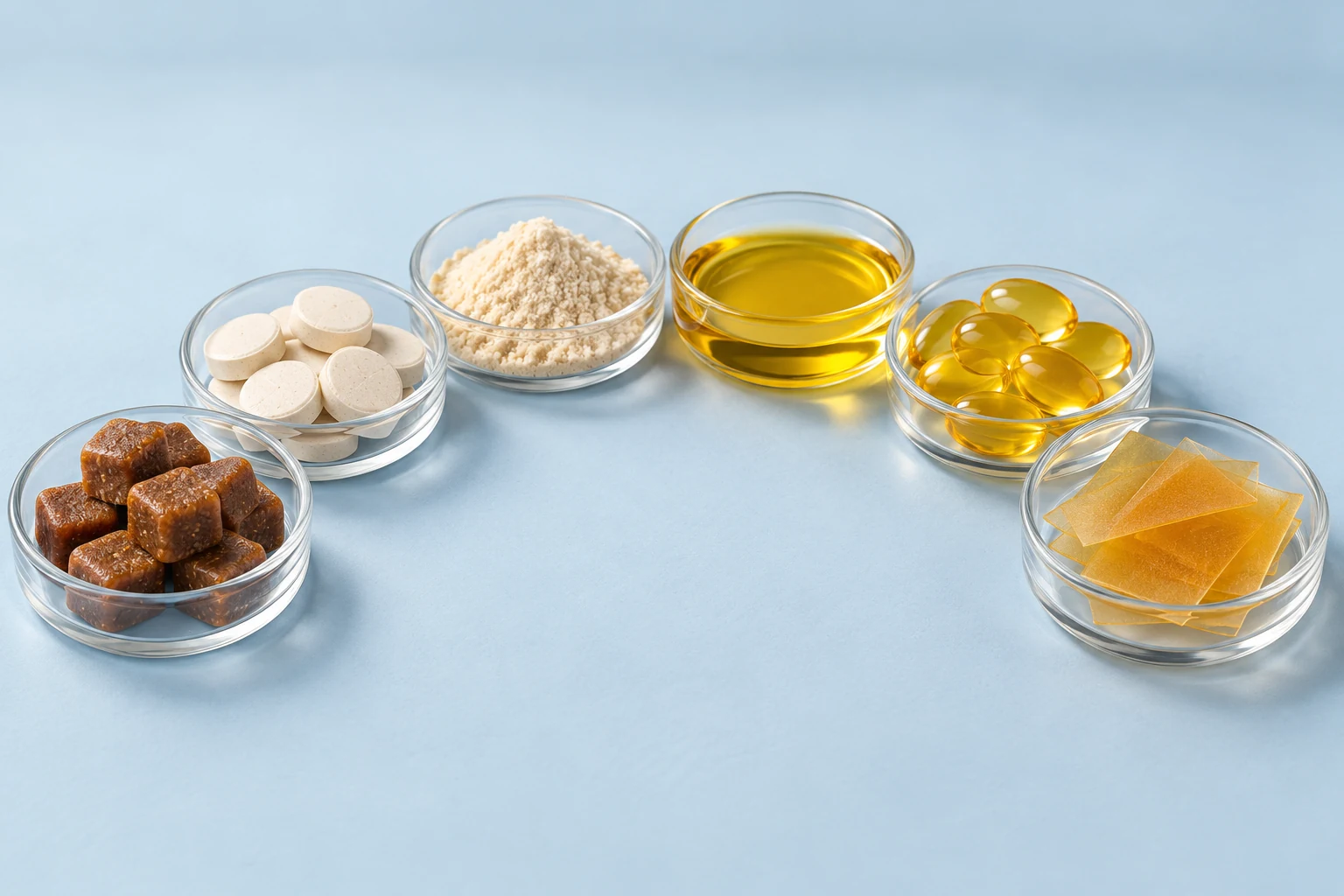
Oral films start at 60,000 films per SKU; functional soft chews and nutritional treats at 100 kg; powders at 50 kg; drops and pet gummies at 1,000 bottles. Other formats, allocation rules and mixed orders need project confirmation. These quantities do not establish sample availability.
Can a startup use a white label reference instead of commissioning a new formula?
A reference can help define the first product, but availability, ingredient specifications and destination suitability must be checked. List any requested changes before quotation. A label change alone does not confirm that a formula is ready for sale in a new market.
Can one brand source oral films, chews, powders and oils through one project?
We can coordinate a multi-format range with separate specifications and order bases. Confirm process suitability, testing, packaging and schedule for each format. A single project contact does not mean all processing happens on one production line or at one plant.
Is pet supplement co-packing available for customer-supplied bulk material?
Submit the material specification, batch documentation, proposed pack and intended market for review. Handling suitability, line compatibility, responsibility for quality release and minimum quantities need agreement before acceptance. Co-packing is not assumed for every bulk material.
What does packaging design support include?
Discuss the container or sachet, unit count, label area, opening method and coding positions. Formula-dependent declarations and directions must be available before artwork approval. Printing files, development fees, material minimums and destination label review are confirmed in the project scope.
What should a turnkey pet nutrition purchase agreement identify?
Identify the formula revision, specification, quantity basis, approved pack, testing scope and release criteria. Assign responsibility for artwork, market review, change control and import documents. Set sample approval and delivery milestones separately from the quotation date.
How is a glucosamine, chondroitin and MSM joint-support brief prepared?
Specify ingredient identities, target amounts per daily serving, species and weight bands. Compare the required load with chew mass, powder portion or tablet count. Hyaluronic acid and other additions need their own specification and compatibility review; ingredient names alone do not establish a finished-product benefit.
How should an omega-3 fish oil project compare liquid oil with softgels?
Compare EPA and DHA per intended serving, the analytical specification and the owner’s measuring task. Total oil weight is a different measure. Review oxidation-related criteria, dispenser output for liquids, and shell compatibility for softgels before choosing a finished pack.
Can a skin-and-coat formula be positioned as an allergy treatment?
Skin-and-coat nutrition and allergy treatment are different intended uses. Review the entire recipe, exclusions and supporting evidence for the proposed destination. A gut–skin-axis concept is a formulation discussion, not proof that the finished product treats an allergic condition.
What needs review for calming chews containing melatonin or hemp ingredients?
Identify the exact ingredient, source and proposed amount, then assess species suitability and destination restrictions before formulation acceptance. Hemp seed derivatives, CBD and other cannabis-related materials must not be treated as interchangeable. A reference product does not confirm an approved recipe or anxiety-treatment claim.
How should a cat taurine supplement be scoped?
State the target cats, life stage, base diet and proposed taurine contribution per serving. Assess the complete formula and feeding method, including flavour carriers. Heart- or eye-related marketing needs its own evidence and market review; taurine inclusion does not establish a treatment effect.
What information is needed for SAM-e or herbal liver-nutrition tablets?
Provide the ingredient form, specification, target content and intended species. Discuss compatibility with compression, moisture protection and the proposed primary pack. Liver and gallbladder wording requires formula-specific evidence review and must not be converted into a disease-treatment promise.
What should a cranberry urinary-nutrition brief specify?
Specify the cranberry material, any declared marker, intended species and daily serving. Review the full formula and permitted wording for the destination. A nutritional concept does not establish infection prevention, stone treatment or suitability for an animal with urinary symptoms.
Can heart, kidney and eye nutrition share one base formula?
Each concept needs a defined nutritional purpose, target animal and ingredient assessment. Sharing a base does not establish that the same nutrient amounts or claims fit all three. Review existing health conditions with a veterinarian and keep each approved product specification distinct.
What is required for a mushroom beta-glucan nutrition powder?
Identify the fungal species, material or extract, part used and analytical basis for any beta-glucan declaration. Define the serving and contaminant-testing scope. Immune-nutrition positioning needs evidence for the actual product and market; a mushroom name alone does not support an immune-boosting promise.
How can multivitamin and B-complex products be specified without excess overlap?
Record the contribution per serving and compare it with the intended base diet and other products in the range. Specify the chemical forms and declaration units. A long ingredient list does not show that every nutrient amount is suitable for the same dog or cat.
What should a breath-freshening oral strip or dental powder claim?
Define the intended nutritional or oral-care role and the evidence supporting the wording. Compare the actual formula, serving and handling method. Do not infer treatment of periodontal disease from breath-freshening positioning or use a general ingredient study as a finished-product dental trial.
How is a senior dog or cat supplement different from a muscle-nutrition brief?
A senior-pet brief considers life stage, the existing diet and practical serving or handling needs. A muscle-nutrition brief also defines activity and the proposed nutritional contribution. Neither label justifies promising muscle gain or using a common serving for every animal.
Can electrolyte powder be marketed for dehydration recovery?
Define a routine nutritional use with the intended animal, diet and serving. Clinical dehydration requires veterinary assessment and may need treatment that a supplement cannot provide. A catalogue hydration concept is not an emergency rehydration product or proof of recovery efficacy.
Can cough, diarrhea, vomiting or nerve-pain searches become supplement treatment claims?
No. These searches involve symptoms or medical uses. A nutrition-development discussion can assess ingredients and an appropriate nutritional purpose, but persistent coughing, diarrhea, vomiting or pain needs veterinary assessment. Do not publish symptom-relief promises without the required product evidence and market authorization.
Is vitamin B6 a pet detox or accidental-ingestion product?
We do not offer vitamin B6 nutrition products as poisoning treatment or an antidote. Suspected ingestion of a harmful substance requires prompt veterinary advice. A nutritional vitamin reference must not be repurposed as an emergency-use claim.
Can herbal extracts and vitamins be combined in one pet formula?
Submit the botanical identity, part, extract specification, vitamin forms and target amounts. Assess species suitability, destination acceptability, taste and stability in the chosen format. Combining more ingredients can change loading and analytical needs; feasibility is confirmed for the complete recipe.
What does ODF mean in pet oral dissolving film projects?
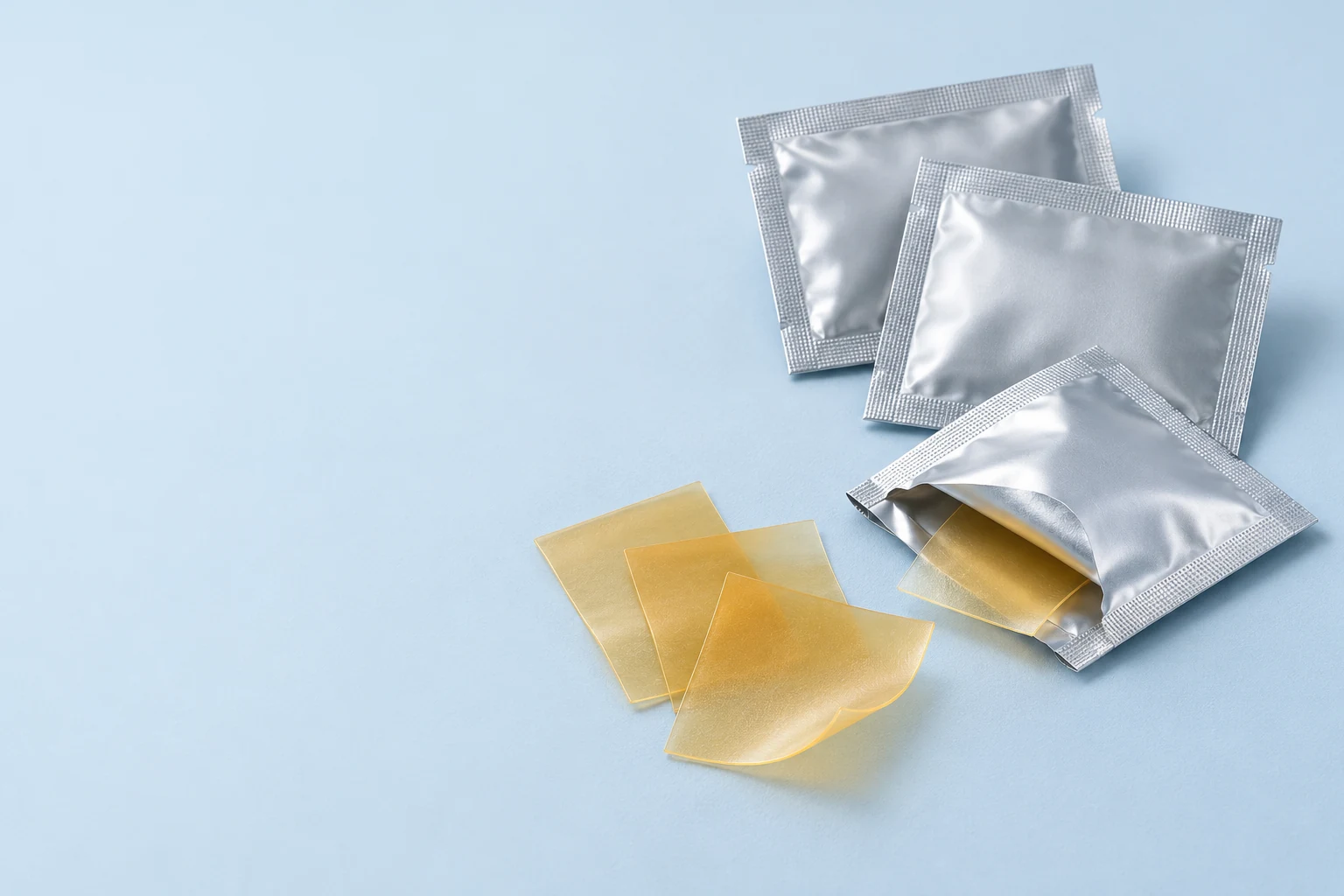
ODF means oral dissolving film. Oral strips and oral dissolvable strips are also used to describe this thin-film format. The term identifies the format; it does not establish sublingual absorption, superior bioavailability or a particular onset time for a pet nutrition formula.
Can joint, gut and calming concepts be developed as pet oral films?
These concepts can be reviewed. Provide the proposed ingredients and target amount per serving first. Film loading, taste, physical handling and stability may limit what fits into one strip. A formula suitable for a large chew or powder portion cannot be assumed to fit unchanged.
Is there a standard dissolution time for every pet ODF?
No universal time is confirmed for every formula. Agree the test medium, temperature, agitation, endpoint and sample handling in the product specification. Distinguish disintegration from dissolution, and avoid treating a demonstration as evidence of absorption or clinical effect.
How are oral-film sachets and card-type packs selected?
Start with film dimensions, moisture sensitivity and the intended opening method. Confirm the barrier, seal, coding and ability to remove an intact portion. Card-type container references and single-dose ampoules are separate packaging formats; compatibility with a film must be demonstrated for the selected design.
What distinguishes a pet chewable tablet from a soft chew?
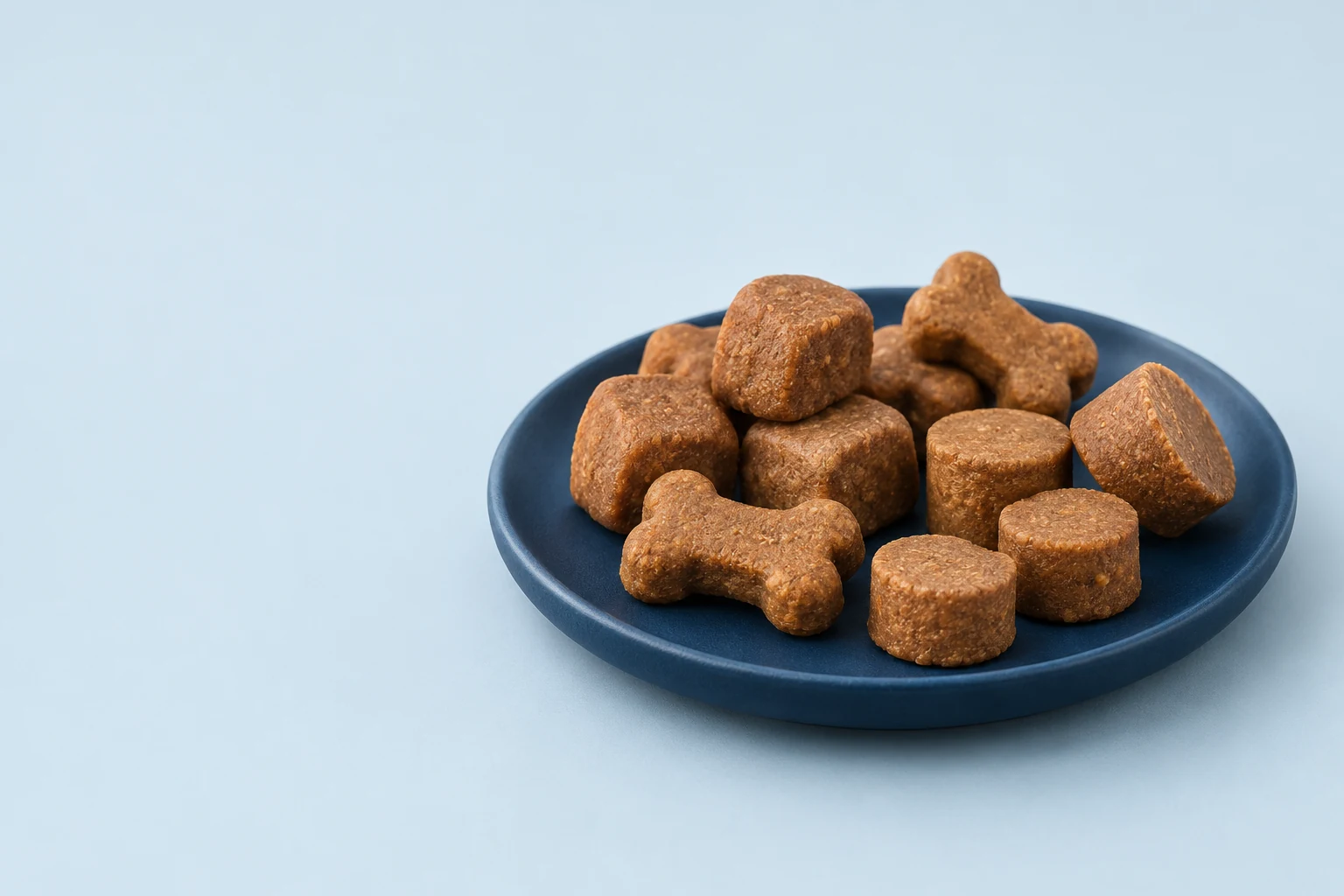
Compare the intended texture, unit mass, formula load and feeding method. A compressed tablet and a soft chew may need different bases, flavour systems and processing conditions. Approve the actual finished unit and its serving instructions rather than transferring an approval between formats.
Can a glass dropper bottle be used for every pet liquid formula?
The bottle is reviewed with the liquid and closure. Check viscosity, delivered volume, material compatibility, light protection and leakage. If the formula needs shaking, evaluate the intended instructions and portion consistency. A glass bottle image alone does not establish compatibility.
Are premixed feed, granules and canned food automatically available under pet supplement OEM?
No. Specify the intended product, inclusion rate, process and package so capability can be reviewed. Powder in a jar is different from retorted canned food, and a finished supplement is different from a feed premix. Minimums and feasibility are confirmed for the requested activity.
Can one base formula be supplied at different strengths?
A strength change needs its own formula calculation, serving instructions and label review. Assess loading, uniformity, taste and analytical requirements for each version. Confirm whether sampling, packaging or testing must be repeated, and agree commercial quantities for the variants.
Is LNHPD the right checklist for a Canadian pet supplement?
LNHPD is not a pet-product approval checklist. For a product potentially classed as a Canadian VHP, assess the VHP Notification Program and current List C conditions for the actual formula, species, route and label. The destination reviewer must confirm the applicable classification and requirements.
Which probiotic strains can be used in a Canadian VHP project?
Check the current List C entry and its conditions for each proposed microorganism, including strain information where required, species and route. A familiar genus or use in a human product does not establish eligibility for the proposed pet product. Do not substitute a strain without reviewing the notification implications.
Can a pet supplement be described as FDA approved or FDA compliant from a catalogue?
No. A catalogue does not establish regulatory status. FDA states that the human DSHEA supplement category does not apply to animal food; intended use affects whether an animal product is food or a drug. Assess the actual ingredients, claims, facility obligations and destination requirements before using regulatory wording.
How should a buyer verify an ISO certificate or a 100,000-grade clean-room claim?
Request current documents identifying the holder, covered site, activity, relevant standard and validity or qualification date. For a clean-room claim, review the classification method and operating conditions. Confirm relevance to the proposed process; a clean-room image does not verify a class or finished-product quality.
Does a COA establish product liability insurance, patents or raw-material authorization?
No. A COA reports results against the stated batch specification. Insurance needs the policy scope, limits and applicable product or transaction; patent use and raw-material authorization need separate documents and permission checks. These matters are confirmed individually rather than promised for every project.
What should buyers examine when assessing formulation and QC capability?
Ask which development and quality activities apply to the proposed product, who performs them, and what methods and controlled records are available. Review relevant sample, specification and change-control examples. Agree any third-party work separately; an independent-laboratory claim needs evidence of the actual scope.
How should incoming raw materials be linked to finished batches?
The project quality plan should identify raw-material specifications, supplier and batch records, acceptance decisions and the manufacturing batch using them. Agree how substitutions and nonconformities are handled. Request evidence relevant to the proposed materials instead of assuming a generic supplier brochure establishes traceability.
Can a brand use catalogue pictures and descriptions for its own marketing?
Agree which approved assets and product facts apply to the ordered formula and pack. Confirm image-use permission and replace reference declarations with the approved product information. A packaging image does not supply evidence for efficacy, certification, ingredient content or destination approval.
How can a brand avoid launching several products that do the same job?
Map each proposed SKU to a feeding occasion, intended species and declared nutritional contribution. Compare ingredient overlap across the range. Keep a separate product only when its brief gives the buyer a clear reason to choose it.
Should the first collection use one format throughout?
A shared format can simplify presentation, but each formula still needs a feasible serving and suitable packaging. Compare the intended nutritional contribution with the unit size before committing an entire collection to films, chews or powders.
What belongs in a target customer profile for pet nutrition?
Describe the buyer’s channel, the intended animal and the owner’s feeding routine. Include storage, portability and measurement needs. These details help turn a broad lifestyle description into requirements that can be checked on a sample.
How can a nutrition concept be differentiated without adding more ingredients?
Consider the species focus, serving clarity, opening method and package use period. A carefully defined formula and easier handling can give a concept a distinct role. Any nutrition statement still needs evidence appropriate to the finished product.
Can a range include both food and supplementary products?
Yes, they can be discussed within one portfolio. Give each product a defined feeding role and its own specification. Keep the nutritional adequacy and serving discussion for a complete food distinct from the brief for a supplementary product.
What should an online product page explain before a customer buys?
Identify the intended species, feeding role, serving instructions, pack contents and storage directions. Present supported ingredient declarations clearly. Leave product-specific health questions to a veterinarian and keep website text consistent with the approved physical label.
How should a brand compare two pack sizes of the same formula?
Calculate the days of use under the approved feeding directions for each intended weight band. Review measurement, repeated opening and label space. A larger pack needs a practical after-opening plan as well as a different front-panel quantity.
Can a premium position be built around documentation?
Clear specifications, appropriate test information and consistent instructions help buyers assess a product. Explain what each document covers. A premium price or attractive package alone provides no evidence of nutritional performance.
When is a seasonal launch concept worth discussing?
Bring the intended season, feeding occasion and market to the brief. Review whether the formula and message have a year-round nutritional basis, then schedule development independently from the marketing calendar.
How should a brand handle a concept that serves too many audiences?
Separate the audiences and write a short brief for each. If the animal, serving or use pattern differs materially, compare separate product options. Keep only combinations that can be supported by clear feeding directions and a workable specification.
What should a marketplace listing avoid borrowing from its category competitors?
Avoid unsupported numerical outcomes, borrowed certification badges and ingredient claims that do not match the actual formula. Use the approved product file to write the title, images and directions, then check them as one set.
How can a buyer organise a first discussion with PET NUTRA BIO?
Send the product idea, intended species, destination and preferred format with the questions you need answered. A reference pack can help explain handling or design preferences; its printed claims remain subjects for independent review.
How should a formula brief record a standardized extract?
Record the botanical identity, relevant plant part, extract specification and the constituent being standardized. State the intended contribution per serving. These fields allow the technical team to compare materials with the same name more accurately.
Why should the formula record distinguish added and total nutrient amounts?
The amount deliberately added and the total amount present can differ because other ingredients contribute nutrients. Ask which basis supports the proposed declaration and how the finished product will be evaluated against its specification.
What is a practical way to record ingredient substitutions?
Use a change record naming the original material, proposed replacement and affected formula version. Review specifications, labels and testing implications before approval. Keep the decision with the project file so later batches can be traced to the right version.
Can the same formula use different ingredient suppliers?
A substitution needs technical review against the agreed raw-material requirements. Identity, concentration and physical behaviour may affect the product. The approved supply arrangement and change procedure should be recorded before routine purchasing begins.
Why does the base diet matter when designing a supplementary product?
A supplementary product adds to an existing nutrient intake. The brief should describe its intended role alongside the normal food. A qualified reviewer can assess the proposed contribution in that context instead of considering the supplement in isolation.
How can a project avoid ambiguous weight-band instructions?
Write complete example servings for the intended animal sizes and check the boundary values. Confirm that the measuring device or unit count can deliver those servings. Have another reader follow the draft directions before artwork approval.
Can flavour be customized for a private label dog or cat supplement?
Flavour adjustment can be discussed with the complete recipe, exclusions and intended species. Identify animal-derived ingredients and flavour carriers as well as the flavour name. Sample feasibility and acceptance review are agreed for the revised formula; an existing flavour name does not establish pet acceptance.
How should a brand specify an ingredient exclusion beyond the main recipe?
Apply the exclusion to flavours, carriers, processing aids and other relevant components. Ask what supporting declarations can be provided and what cross-contact controls are relevant. Use a claim only after its scope and evidence have been assessed.
Can a smaller unit contain the same declared contribution as a larger one?
Possibly, depending on ingredient concentration and the complete formulation. Compare the actual material specifications, supporting ingredients and physical feasibility. Confirm the finished unit before assuming that reducing its size preserves every other characteristic.
How should added overages be discussed in a formulation project?
Ask the technical team to explain the reason, calculation basis and effect on the finished specification. Any overage belongs in the controlled formulation and stability review. It should not be selected as an arbitrary marketing allowance.
What should a private label pet probiotic specification include?
Identify microorganisms to strain level where relevant, the declared viable-count basis, analytical method and intended shelf-life endpoint. Specify storage and moisture protection in the final pack. For blends with prebiotics or digestive enzymes, record their identities and activity measures separately.
Why should a formula include its intended measurement method?
A declaration is easier to assess when the expected amount is connected to a suitable method and reporting basis. Discuss method availability during development so a target is not approved before the team knows how it will be checked.
What if a dog eats the food but leaves the supplement behind?
Record what was offered, what remained and how the product was presented. Follow the product directions and seek veterinary advice when intake is uncertain or a feeding issue persists. For development, use the observation to refine acceptance and handling criteria.
How should a supplement be designed for a cat that grazes?
The brief should address how the intended serving can be offered and its consumption observed without disrupting normal intake. Shared bowls and leftovers complicate measurement. An individual cat’s prescribed nutrition plan needs guidance from its veterinarian.
Does a pet approaching a sample count as acceptance?
Approaching, tasting and consuming the full intended serving are different outcomes. Define the outcome before an assessment and record the amount consumed. Keep the test population, conditions and limitations with the result.
Should acceptance be checked more than once?
Repeated-use observations may reveal changes that a first encounter misses. Agree a suitable protocol for the project and intended species. A limited development exercise should be described with its actual scope, without implying a clinical feeding trial.
What should an owner do when a pet suddenly refuses its normal meals?
Contact a veterinarian about an unexplained appetite change, especially when it persists or comes with other signs. Avoid repeatedly masking the issue with new supplements. Keep the food and product details available for the consultation.
How can a small-dog product reduce awkward handling?
Evaluate the complete daily serving at the intended unit dimensions. Check whether counting, measuring and offering it is practical. The formula review must establish suitability; a small package or small unit alone does not do that.
What should an acceptance review record about the owner?
Record the instructions given and the handling steps used, including any mixing or measuring. This helps distinguish a product issue from an unclear instruction and makes the observations more useful when a sample is revised.
Can a pet be assumed to accept every product with the same flavour name?
No. Aroma, texture, concentration and the base formula can differ. Evaluate representative finished samples under the intended offering conditions instead of extending one product’s observations to an entire range.
How should a multi-pet household be considered in development?
Include separate feeding, portion identification and storage in the brief. The intended serving should be offered to the intended animal. Avoid directions that rely on a shared bowl when individual consumption needs to be known.
Is masking a supplement in extra treats part of the product specification?
Only include a mixing or offering method after it has been reviewed for the product. The added food also changes the overall feeding routine. Ask a veterinarian about individual feeding concerns rather than adopting unverified online methods.
What can a handling study learn from a partly used pack?
It can reveal difficulty retrieving the last portions, residue around the closure or fading instructions. Review the whole use period with representative packaging. Record these as handling observations and investigate any product-quality change separately.
Should a supplement instruction cover what happens after refusal?
A clear instruction can direct owners to the label and a veterinary professional when intake is uncertain. It should avoid encouraging repeated extra servings. Product development should anticipate incomplete consumption before the final directions are approved.
What is ingredient loading in a pet oral film brief?
It is the amount of material incorporated into the film, considered with its dimensions and complete base formulation. Distinguish that quantity from the declared nutrient contribution and from the number of films in the proposed daily serving.
Why evaluate a film after removing it from its intended sachet?
The pack and unit interact during opening. Representative samples can show whether the unit is accessible and remains intact. Record the opening method and handling conditions alongside the sample reference.
What should an oral film specification say about dimensions?
Identify the agreed dimensions and any relevant tolerances or measurement method. Connect them to the serving and primary pack. A photograph or a generic film size does not define the approved production unit.
How is shelf life set for a custom pet oral film?
Use stability evidence for the approved formula in its final primary pack under defined storage conditions. Agree the attributes and limits to follow, including relevant nutrient content, physical performance and microbiological quality. A generic 24-month statement or a fresh sample video is not sufficient.
Can a film carry a high-volume powder formula unchanged?
The required solids may exceed a practical film design. Review the nutritional target, ingredient concentration and complete film base. The outcome may involve a different serving arrangement or a more suitable format.
What should a film development sample be labelled with?
Use a sample identifier connected to the formula revision, dimensions and packaging configuration. Add the intended review purpose. This prevents an early appearance sample from being mistaken for the approved product reference.
Can a film be approved before its flavour is chosen?
Early feasibility samples can be reviewed, but the final flavour may affect composition and physical behaviour. Complete the relevant review on the intended finished formula before the product reference is approved.
How should a customer request a film video demonstration?
State whether you need to review sachet opening, handling, unit appearance or a defined test method. A video can make a specific observation easier to discuss; request the supporting conditions and sample identity as well.
Does human oral-film production experience establish pet palatability?
It does not. Our production approach follows human oral-film standards, while pet acceptance requires evaluation of the specific formula and intended species. The relevant standard designation and project documentation are discussed separately.
What can change oral-film disintegration or handling after storage?
Review moisture exposure, film composition, thickness, ingredient loading and the primary pack. The test should use the approved formula and specified storage conditions. A change in the barrier material or seal may require reassessment even when the film recipe is unchanged.
Which film commercial details must accompany a 60,000-film proposal?
Confirm how the quantity is allocated by formula, SKU and packaging, and whether mixed orders are accepted. Those details are project-specific. Pack counts, artwork and any additional testing should appear in the same quotation scope.
Can pet oral films be advertised with over 90% bioavailability?
We do not make that claim for our pet nutrition films. A result from a specific medicine, film formulation and rabbit study cannot establish performance in dogs or cats. Absorption claims require evidence for the actual product, species, route and comparator.
How should powder dispersibility be assessed?
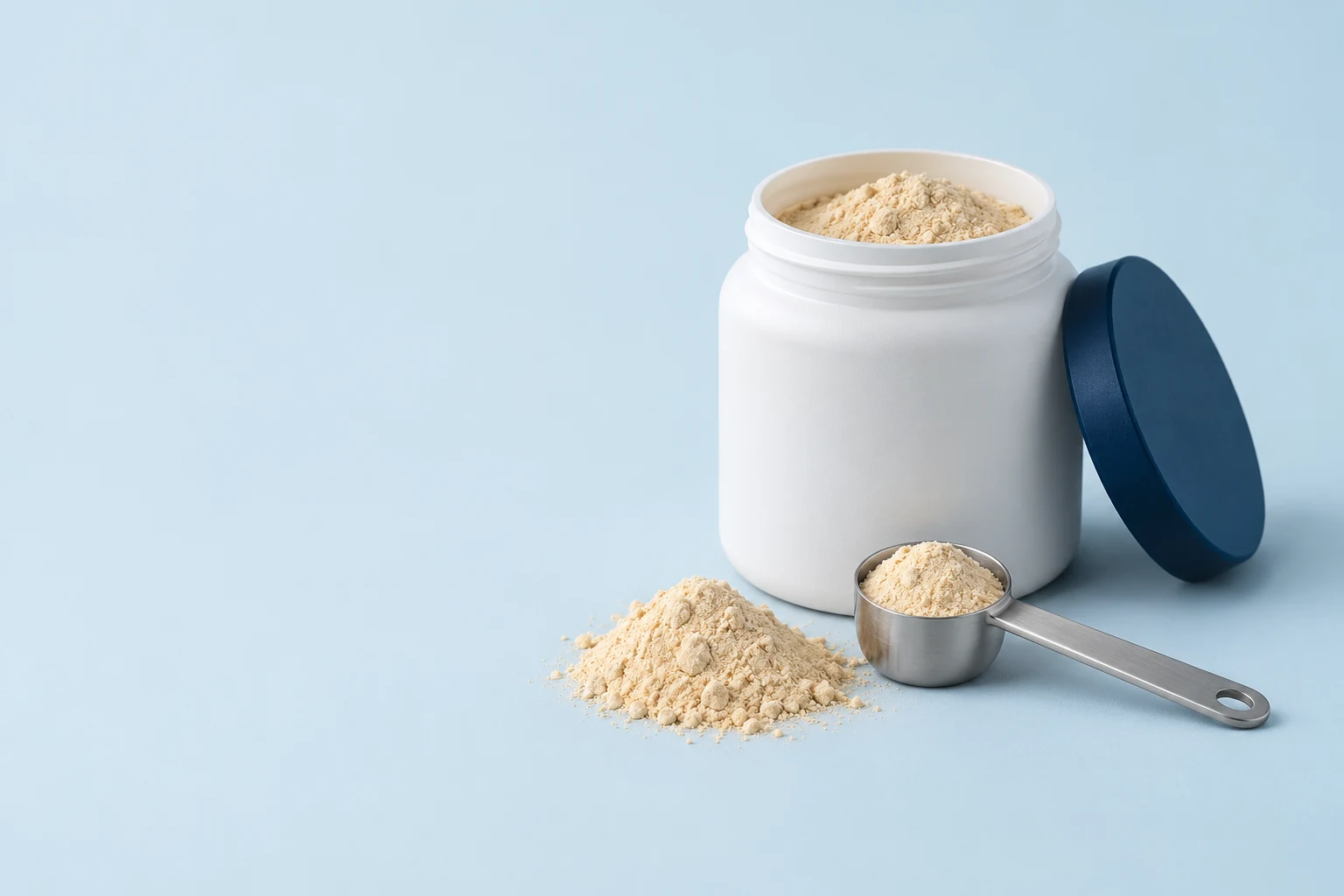
Use the intended serving and the relevant mixing medium under stated conditions. Record visible residue and mixing effort. Distinguish dispersion from true dissolution, and avoid a general soluble claim unless the product evidence supports it.
Why might two scoops of different powders weigh differently?
Bulk density and filling technique can differ. Evaluate the selected measure with the actual formulation and clear directions. Use a specified serving mass in the technical file and assess how the consumer measure represents it.
What is powder segregation and why ask about it?
A blend’s components can distribute unevenly under some handling conditions. Ask the technical team which blend characteristics and controls are relevant to the formula. Serving consistency should be considered with processing, packaging and use.
Can probiotic powders use both jars and stick packs?
Both configurations can be reviewed with the selected powder. Define portion mass, moisture protection and the shelf-life declaration basis for each. Jar opening and scooping create a different handling pattern from sealed portions. Confirm packaging minimums and whether each configuration needs separate stability work.
What should a chew texture brief describe?
Describe the intended unit size, handling and target animal. Define the physical characteristics the team will assess and the conditions of storage. A photograph cannot establish the finished chew’s texture or acceptance.
Why should chew calories be discussed early?
The feeding routine includes every product offered. Ask how the finished product’s energy information will be assessed and communicated for its market. Consider the proposed daily serving alongside the animal’s usual food.
Can a tablet score line automatically justify a half-tablet serving?
The proposed division needs review for practical splitting and distribution of the relevant ingredients. Confirm the instruction and evidence before using the score line as a measurement claim.
What should be checked when a tablet becomes smaller?
Review the complete formula, concentration, physical integrity and intended serving count. Confirm whether the revised dimensions change handling or packaging. Keep the approved tablet reference connected to the revised specification.
How can a powder project address residue on the scoop?
Assess the formulation with the selected scoop and normal handling conditions. Record whether residue affects practical use or measurement, then review suitable changes to the blend, device or instruction with the technical team.
Should a chew be evaluated straight from a refrigerated sample shipment?
Evaluate it under defined conditions relevant to intended use. Record shipment and storage history before comparing texture observations. An unusual sample condition should be investigated instead of becoming an unqualified product judgment.
What should a tablet abrasion or breakage discussion cover?
Define the relevant handling and transport conditions and agree suitable acceptance criteria. Use representative finished units and packaging. Record the method and findings in the product review rather than relying on a visual impression alone.
How should leftover powder be handled during a sample comparison?
Follow the sample instructions and keep samples identified and separated. Record opening date and storage conditions. Do not combine different samples, because the resulting mixture cannot be traced to a single formulation.
What should an oil specification state beyond the fish species?
Define the intended fatty-acid declaration, material identity and relevant quality characteristics. Connect them to the daily serving and test methods. The fish name alone does not establish nutritional concentration or finished-product quality.
How should pump delivery be checked during development?
Evaluate the intended bottle and pump with the actual liquid under defined conditions. Review delivered volume consistency, priming and leakage. Confirm that the final feeding directions correspond to the assessed dispenser.
Can an oil sample use a temporary bottle for final approval?
The liquid can be reviewed provisionally, but the final container and closure need their own compatibility and handling assessment. Record the approved packaging configuration with the product specification and stability plan.
What is an after-opening oil review intended to answer?
It assesses the product under its proposed repeated-use conditions and storage instructions. Agree the characteristics and duration to be studied. An unopened-product result should not be extended automatically to a partly used bottle.
Why distinguish millilitres from milligrams on an oil brief?
Volume and mass describe different quantities, while the declared nutrient amount may be different again. State the intended measurement and the basis for any conversion. Align the label directions with the finished-product specification.
What should be specified for an emulsion project?
Describe the intended composition, serving, appearance and relevant physical stability requirements. Review the container, dispensing method and storage conditions with the technical team. A uniform-looking fresh sample does not establish long-term stability.
Does a softgel project require review of the shell ingredients?
Yes. Review the complete shell and fill against species suitability, exclusion requests and label requirements. Connect the unit dimensions and fill amount to the intended serving and packaging.
Can capsule size be chosen from an empty-shell photograph?
Use the required fill and material properties to discuss size, then review representative finished units. The empty shell does not establish fill capacity for every blend or practical acceptance for the intended animal.
What should a liquid project say about shaking before use?
Agree whether shaking is needed and how the instruction is supported for the actual formulation. Any dispersion behaviour and measurement implications belong in the technical assessment before the feeding directions are finalised.
How should a leaking dispenser complaint be documented?
Keep the bottle, closure and packaging details with the lot information. Photograph the leak and record storage and transport history. Contact the supplier for review and follow the label; separate any animal-health concern for veterinary assessment.
Can one dropper be shared between several product formulas?
Avoid cross-contamination and follow each product’s instructions. For packaging development, assess the intended device as part of each product configuration. A similar bottle neck does not establish interchangeable measurement or compatibility.
What should a liquid prototype review record about residue?
Describe where it appears, its timing and the sample’s storage history. Use photographs and the sample identifier. The technical team can assess whether it relates to formulation, packaging or handling before a conclusion is drawn.
How should a tear notch be reviewed for a small sachet?
Use representative filled packs and the intended opening direction. Assess whether the user can open the pack and retrieve the product intact. Keep seal area, code position and handling space in the same review.
What should a travel pack brief include?
Describe transport, opening frequency and the number of servings required. Include protection from expected environmental conditions and space for clear instructions. Portability claims should reflect the actual pack and product review.
How can a brand compare a carton with a bottle sleeve?
Compare usable label area, identification, assembly and the owner’s handling. Review the primary pack protection separately. Neither an attractive sleeve nor a larger carton establishes product stability.
Why keep a print proof with the formula revision?
The ingredient declaration and serving instructions depend on the formula. Linking their versions helps prevent an older label being used with a revised product. Save the approved proof and the actual printed component reference.
What should be checked about a batch code’s contrast?
Read a representative printed code against the actual material under ordinary lighting. Check legibility after relevant handling. Confirm that the code and date remain distinguishable from surrounding artwork and can be transcribed accurately.
Should inner sachets and the outer box identify the same product?
The packaging levels should remain traceable to the correct product and batch under the agreed coding system. Decide which identifiers belong on each component before printing and packing operations are approved.
How can a multilingual carton remain readable?
Plan the information hierarchy and available area before translation is placed. Confirm the intended markets and have the required physical label text reviewed. Website language choices do not settle the carton’s country-specific requirements.
What does a packaging compatibility review cover?
It examines the interaction between the actual product, primary material and closure under intended conditions. Agree the questions and methods for the project. A material supplier’s general description is one input to that review.
Can a sustainability statement be based only on a supplier brochure?
Assess the exact packaging material and the scope of the proposed statement. Recycling and disposal conditions can vary by market. Use wording supported for the actual pack and obtain the relevant destination review.
Why review the last serving in a container?
The remaining portion may be harder to measure or retrieve. A full-use handling review can identify residue, access and closure problems. Include those observations when deciding the final container and measuring device.
What should an owner keep after opening a carton?
Retain the product identity, batch and date information while the product is in use. Follow the storage directions. These details make a later quality enquiry easier to investigate.
Can a package redesign keep the previous product tests?
Assess what changed. Primary material, closure, fill and use conditions may affect the supporting evidence. Record which previous results remain applicable and which questions need additional work before approval.
How can a buyer tell whether a report applies to the ordered formula?
Match the product code, formula revision, sample description and batch details to the purchase file. Ask for clarification where the identity is incomplete. A familiar brand name alone does not connect the report to the ordered product.
Why should a test result include its reporting unit?
The value is meaningful only with its unit, method and sample basis. Compare those fields with the acceptance criteria. Resolve any conversion explicitly before using the result for a release decision.
What does a result below a reporting limit mean?
Read it within the laboratory method and stated limit. It does not prove absolute absence. Ask whether the reporting capability is suitable for the acceptance criterion agreed for that product and market.
Can a contaminant screen verify the declared nutritional ingredients?
A contaminant screen addresses its listed analytes. Nutritional identity or content needs appropriate evidence of its own. Build a document checklist around each declaration and relevant product risk.
How should two laboratories’ results be compared?
Check the sample identity, preparation, method, unit and reporting capability before comparing values. Differences may need technical discussion. Keep the actual reports and the agreed interpretation with the product record.
What should a stability protocol identify at the start?
Identify the formula, primary package, storage conditions, sampling times and characteristics to be assessed. Agree suitable criteria and responsibilities. The resulting evidence should remain tied to that defined configuration.
Why review sample custody for commissioned testing?
The buyer needs to know which material reached the laboratory and how it was identified. Agree sampling, sealing, transport and documentation before dispatch. Clear custody records make the report easier to interpret.
Can a passing prototype report release a later commercial batch?
A prototype result supports the sample and scope tested. The commercial batch needs the agreed release review. Record which development findings are applicable and which batch-specific evidence is required.
How should a specification revision be approved?
Give the new version an identifier, describe the changed requirements and obtain the agreed approval. Review its effect on the formula, label and test plan. Retain the previous version for traceability.
Which indicators should a pet supplement COA contain?
Identify the product and formula revision, batch, specification limits, methods, units and results for the agreed tests. Nutrient markers, physical properties and contaminant panels depend on the selected product and destination. A pass statement without a method, limit or reporting basis may need clarification.
How can a video tour support supplier assessment?
Prepare questions tied to the actual project and request an appointment with our production base in China. A video visit can clarify observations and communication; document requests and product evidence still need separate review.
What does third-party testing include in a PET NUTRA BIO project?
Heavy metal, microbiological and mycotoxin work can be arranged. The exact analytes, laboratory, sample requirements, cost and timing are agreed before commissioning. Additional requirements should be listed in the enquiry.
How can a brand connect a website claim to its evidence?
Maintain a claim register with the exact wording, applicable formula and supporting document. Review it when the formula or packaging changes. Use the same approved meaning across the carton, product page and sales material.
Can an ingredient research paper be used as a finished-product study?
Identify the studied ingredient, serving, format, species and outcome before assessing relevance. A paper about a different preparation does not become a trial of the finished product. State limitations in any technical discussion.
What should an article author do with an owner’s anecdote?
Use it to understand a practical question, such as difficult measurement or refusal. Verify factual answers through appropriate evidence. An individual experience cannot establish product efficacy or predict another animal’s response.
How should before-and-after pet photographs be assessed for marketing?
Confirm their provenance, consent and the meaning the presentation would imply. Images can suggest an outcome even without a written promise. Use a claim only when its evidence and destination-market review support it.
Can a generic laboratory image identify the testing laboratory?
No. Use project documents to identify commissioned testing. Editorial imagery can explain a subject, but it should not be presented as proof of a particular facility, qualification or completed test.
What should a label reviewer ask about all-life-stages wording?
Assess the actual feeding role and substantiation required for that statement in the destination. Do not infer it from a broad ingredient list. Complete food and supplementary products need distinct review.
Why should country review happen before the translated artwork is printed?
The market may affect ingredient names, mandatory fields and acceptable claims. A fluent translation can still be unsuitable for a particular territory. Reserve time for the importer’s or qualified reviewer’s approval.
Can a customer testimonial add a disease-treatment claim to a product page?
A testimonial can create a claim through its context. Review user stories and accompanying images against the same evidence and market requirements as other marketing copy. Keep nutritional positioning within its supported scope.
How should oral-film production standards be described on a website?
We can state the confirmed human oral-film production approach. Specific standard numbers, certifications and product approvals need their own documentation. The statement does not establish the safety or effectiveness of every proposed pet formula.
What should a brand do when a published claim outlives its evidence?
Review the affected material and correct or remove unsupported wording. Record the decision in the claim register and check related labels, listings and sales documents so outdated versions do not continue circulating.
Does a professional-looking website establish a supplier’s capacity?
No. Ask for project-relevant evidence and confirm feasibility, quantities and schedule directly. Visual presentation can make information easier to assess, while operational claims require documentation appropriate to their scope.
How can an FAQ remain useful without becoming veterinary advice?
Explain the product-development or handling question and identify the information needed to assess it. Direct individual health and feeding concerns to a veterinarian. Avoid turning a general answer into a diagnosis or dosing instruction.
Can a brand request samples before committing to bulk production?
Send the proposed formula direction, format and review purpose. We will check available references or the feasibility of a project sample. Sample stock, preparation, fees and freight are not assumed; agree them before a shipment or sampling commitment.
What determines production lead time after sample approval?
Confirm formula and packaging release, raw-material availability, printed-material commitments, testing and the production schedule. Agree an order-specific lead time in writing. The approximately 1–2-day new-formula costing window is not a sampling, manufacturing or shipping promise.
What should be resolved before ordering printed packaging?
Approve the formula-dependent text, pack configuration, code positions and destination review. Confirm artwork version and quantity. Packaging commitments should refer to controlled files that the project participants can identify.
Can a buyer request a different testing panel after quotation?
Yes, discuss the revised scope before commissioning or production commitments. Confirm any changes to sampling, costs and timing in writing. Update the purchase specification and quotation so they describe the same requirements.
How should a project record a change in pack count?
Review the carton, net quantity, directions and days of use, then update the relevant controlled files. Confirm commercial effects and whether the primary packaging or stability assessment changes.
What belongs in a written sample approval?
Identify the sample, formula revision, packaging configuration and characteristics approved. List unresolved points separately. An approval for appearance should not be treated as approval of every technical or commercial requirement.
How can a buyer prepare a focused production-base video appointment?
Send the proposed product and a short list of process, quality and packaging questions. We can coordinate an appointment with our production base in China. Agree which documents or sample details will be discussed alongside the video.
What should be checked before repeating an order?
Confirm formula and artwork revisions, remaining packaging, current specification and commercial terms. Ask whether any materials or requirements have changed. A repeat product name does not replace that review.
Can the oral-film minimum be converted directly into a fixed number of boxes?
The minimum is 60,000 films per SKU. The number of boxes depends on the agreed films per box and packaging allocation. Confirm any mixed-order proposal separately; dividing the quantity across different SKUs does not change the confirmed per-SKU minimum.
What information is needed before reviewing pet supplement export documents?
Provide the destination, intended classification, species, complete ingredient identities and amounts, serving, claims and final pack. Agree the importer or qualified reviewer and list the required documents with responsible parties. We can discuss available product specifications and COA; automatic registration or import clearance is not promised.
Can you provide a fixed price before ingredient ratios and packaging are chosen?
A selling quotation requires the formula, ingredient ratios and packaging assumptions. Once those are sufficiently defined, new-formula costing is approximately 1–2 days. Sampling, test work, production and transport are scheduled separately. Catalogue references are not fixed-price offers.
Where can a brand contact PET NUTRA BIO about a custom product?
Use the project enquiry form or email info@petnutrabio.com. Include the intended species, product direction, format, market and approximate order requirement so the discussion can address the relevant technical and commercial questions.
Why photograph the batch code when opening a new product?
A clear photograph keeps the identifying details accessible if the carton is discarded or the code wears. Retain the original packaging while the product is in use and follow the label’s storage instructions.
Can condensation affect how a stored product is assessed?
Record temperature changes and any moisture exposure when reporting a concern. Follow the labelled storage directions. A supplier can review the product and packaging history; appearance alone cannot establish continued conformity.
Should a retailer combine remnants from two batches in one display jar?
Keep products in their identified packaging and follow the storage instructions. Mixing batches makes traceability and date control more difficult. Any retail handling arrangement needs review for the actual product and market.
What should a customer service team ask about a damaged sachet?
Request photographs, product identity, batch details and the circumstances in which damage was found. Ask the customer to retain the pack and contents for investigation. Any associated animal-health concern requires veterinary advice.
How should a brand record a report of unusual odour?
Capture the product, batch, opening date, storage and description of the change. Keep the remaining pack available and contact the supplier. Odour is an observation to investigate, rather than a complete quality assessment.
Can a storage instruction be copied from another formula in the range?
Use the instruction supported for the actual formulation and primary package. Similar branding or format does not establish the same storage requirements. Review any proposed common wording with the relevant product evidence.
What should a customer do if a printed date is unreadable?
Contact the seller or supplier with photographs and available product identifiers before use decisions. Keep the original package. Brands should investigate the coding issue and review its effect on traceability.
How should a customer service record distinguish observation from diagnosis?
Record what the customer saw, when it happened and which product was used. Keep medical interpretations with veterinary professionals. This produces a clearer investigation file and avoids overstating what the report establishes.
Why keep storage history with a returned sample?
The sample’s conditions after purchase can affect how observations are interpreted. Record opening, temperature exposure and any transfer to another container. Keep that information separate from confirmed laboratory findings.
Can a website answer establish that a specific opened pack is safe?
A general answer cannot assess an individual pack. Follow its directions and contact the supplier about a quality concern, keeping the product and batch information. Seek veterinary advice for any animal-health issue.
How should a brand manage repeated questions about difficult packaging?
Group reports by the same product and packaging version, review the actual handling problem and assess representative samples. Feed the findings into the next controlled packaging review rather than changing instructions informally.
What information makes follow-up after a product review more useful?
Reference the original enquiry or sample identifier and describe the specific decision still open. Add photographs or controlled document versions where relevant. A focused follow-up helps the team resolve the issue without reconstructing the entire project.
No matching questions. Try a broader word.
Bring us your next product idea.
Tell us the animal, nutrition direction, intended market and preferred format. We can help define the formula and packaging questions for a useful proposal.